

A little life

A little life,
unfolding

See what may change as your baby grows through their first two years.

Learn what to look for and find simple ways to respond.

Your baby’s first two years

Enter a birthday to find todayweek by week

Start with what you may notice now and one simple thing to try. Open a chapter for development, crying and settling, sleep, feeding and growth.

Personalise this timeline
Keyboard shortcuts

Alt+Shift+P personalise this timeline

Alt+Shift+J jump to now

  1. Birth–W2

    Within Birth to week 2

    The first days with your newborn

    What you may notice now

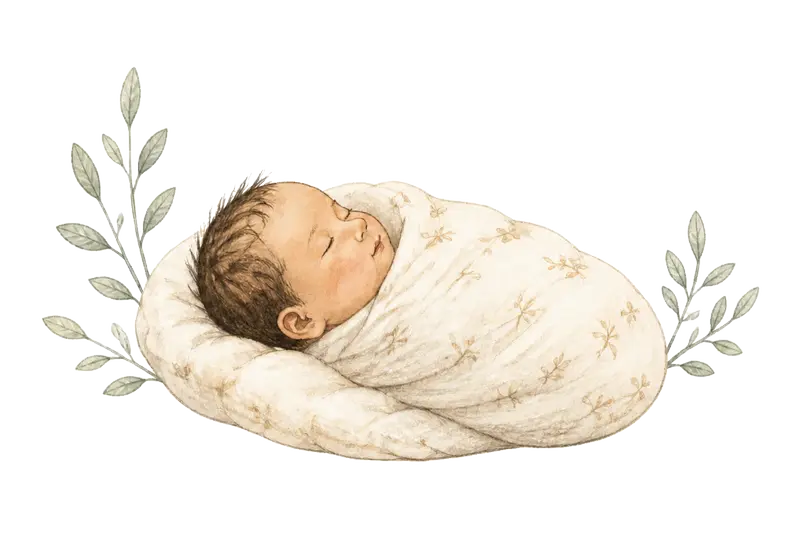
    In the first days, most of your time may go into feeding, settling and recovering from birth. Your baby sleeps in short stretches and uses crying to ask for care. They can already notice close faces and familiar voices. A small early weight loss is common, and health professionals will check that weight begins to rise again.

    • Your newborn can see you up close
    • Crying asks for care

    Try this together

    Hold your baby close enough to see your face. Speak softly, then pause. If they become still or look away, give them a break.

    See all five topics
  2. W3–4

    Within Weeks 3–4

    Days and nights are still mixed up

    What you may notice now

    At three or four weeks, your baby still sleeps and feeds around the clock. They see most clearly when your face is close and may briefly follow light or movement. Crying can be stronger at some times of day than others. Daylight and ordinary household sounds during the day can gently help your baby begin to tell day from night.

    • Your baby sees best up close
    • Sleep still happens around the clock

    Try this together

    Open curtains and use ordinary voices by day. During night feeds and changes, keep light and conversation lower and follow your baby’s cues.

    See all five topics
  3. W5–6

    Within Weeks 5–6

    Crying may be louder around six weeks

    What you may notice now

    Many babies cry more around this age, although the timing and amount vary. Your face is still easiest to see up close, and your voice may help your baby settle. Feeds can come close together and sleep is still scattered through the day and night. Keep play brief and pause when your baby looks away or becomes restless.

    • Your face is clearest up close
    • Crying often increases in the early weeks

    Try this together

    Choose a calm, alert moment and bring your face about a forearm’s length away. Speak softly and move slowly. If your baby looks away, pause and try again later.

    See all five topics
  4. W7–9

    Within Weeks 7–9

    Smiles may answer your voice

    What you may notice now

    During calm, awake periods, your baby may watch your face for longer and smile when you smile or talk. Your voice or touch may also help them settle. These responses can be brief and will not happen every time. If your baby looks away, becomes still or fusses, pause and give them time to rest.

    • Your baby may smile back
    • Your voice and touch may help

    Try this together

    Smile or speak once, then wait. A look, movement, sound or quiet pause can all be your baby’s response back to you.

    See all five topics
  5. W10–12

    Within Weeks 10–12

    More time awake to look and listen

    What you may notice now

    By ten to twelve weeks, your baby may stay awake for longer and follow a face or slowly moving object more steadily. Milk is still their only food and sleep remains spread across the full day. During play, pause after you speak or move something so your baby has time to look, move or make a sound in reply.

    • Looking and tracking may become steadier
    • It may be easier to see what helps

    Try this together

    Move one object slowly across a short distance, then pause. Give your baby time to look, move or make a sound before changing direction.

    See all five topics
  6. W13–17

    Within Weeks 13–17

    Head control is getting steadier

    What you may notice now

    Your baby may hold their head more steadily while being carried or during floor play. Hands, faces, sounds and changing light can keep their attention for longer. Some babies begin to sleep for longer stretches, while others continue to wake often. Milk remains their only food, even if they have started watching other people eat.

    • Head control may feel steadier
    • Hunger, tiredness and stimulation can overlap

    Try this together

    Offer supervised floor time in short spells. Change position or pause when your baby looks away, fusses or shows they have had enough.

    See all five topics
  7. W18–25

    Within Weeks 18–25

    Reaching, turning and rolling

    What you may notice now

    Your baby may now reach across their body, turn on the floor or roll from tummy to back. Sounds, looks and hand movements may come together more often during play. Give them safe floor space and time to try again without positioning them into a skill. Milk remains the main food until the signs of readiness for solids appear together at around 6 months.

    • Rolling changes what your baby can reach
    • Familiar comfort still helps

    Try this together

    Give your baby supervised floor space with an interesting object just within comfortable reach. Let their own movement decide what happens next.

    See all five topics
  8. W26–30

    Within Weeks 26–30

    Sitting practice and first tastes

    What you may notice now

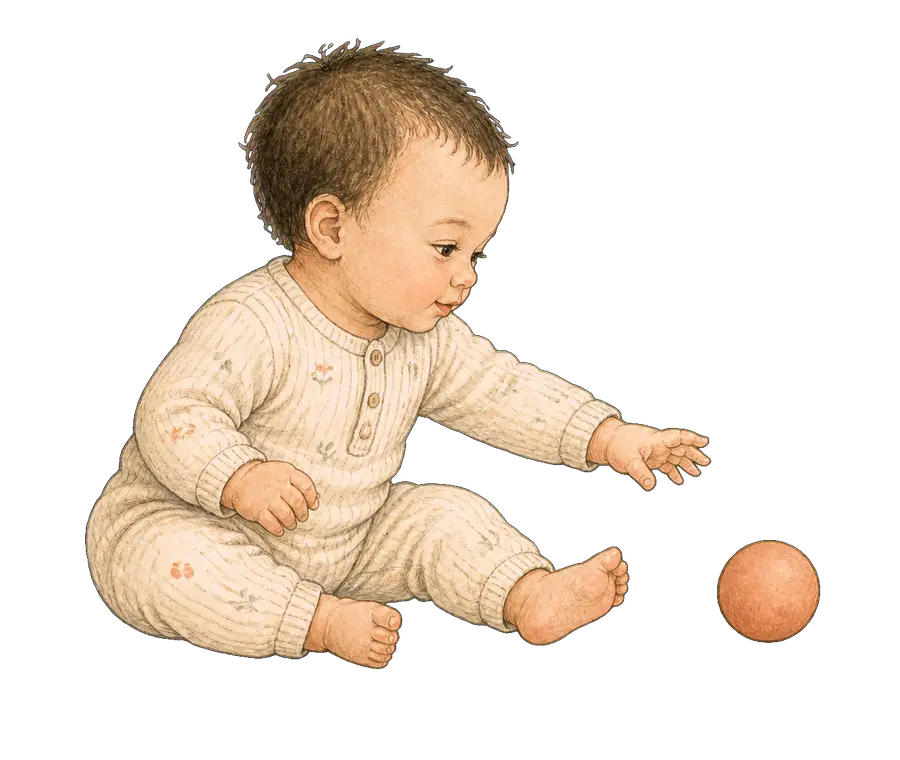
    At around 6 months, your baby may sit with support, reach for toys and take turns making sounds. Solid food can begin when they can sit steadily with good head control, bring food to their mouth and swallow it. Start with small tastes and textures while continuing their usual milk feeds.

    • Sitting takes practice
    • Your baby may react when you leave

    Try this together

    Sit together on the floor with space to lean and reach. Keep your hands nearby without holding your baby in one fixed posture.

    See all five topics
  9. W31–35

    Within Weeks 31–35

    More movement at meals and on the floor

    What you may notice now

    Your baby may sit for longer, reach farther and make a wider range of sounds. At meals, they can practise soft lumps, finger foods and drinking from an open cup with help. Sleep may change as movement, feeding and awareness develop. Give them regular chances to practise without expecting every meal or play session to go smoothly.

    • Sitting may become more stable
    • Leaving the room may bring a reaction

    Try this together

    Use a brief, familiar goodbye and return warmly. Peek-a-boo can make leaving and returning feel playful without testing your baby.

    See all five topics
  10. W36–40

    Within Weeks 36–40

    Your baby may respond to their name

    What you may notice now

    At around 9 months, your baby may turn when you call their name, look for a dropped object or enjoy games such as peek-a-boo. They may also react when you leave or when someone unfamiliar comes close. These responses often appear at different times, so notice what your baby does without repeatedly testing them.

    • Your baby may turn, search and copy sounds
    • Separation may bring a stronger reaction

    Try this together

    Say your baby’s name once from nearby, then pause. Notice what has caught their attention instead of repeating their name to test them.

    See all five topics
  11. W41–45

    Within Weeks 41–45

    Babies find different ways to move

    What you may notice now

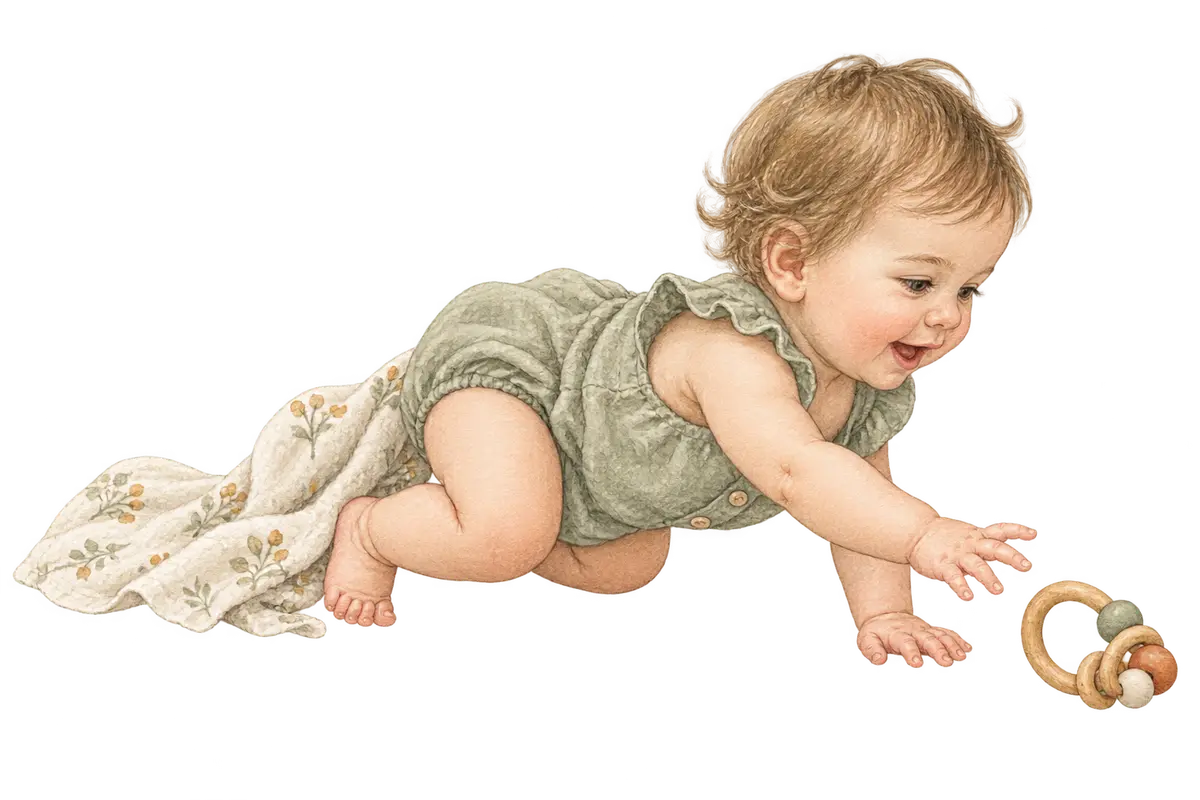
    Your baby may crawl, shuffle, roll or use another way to reach what interests them. Some babies move straight on to pulling up without spending long on hands and knees. Gestures and searching games continue to develop alongside movement. Familiar goodbyes and warm returns can help when separation feels difficult.

    • There is more than one way to get around
    • Goodbyes may be difficult

    Try this together

    Create a clear floor route to a familiar object and let your baby choose how to cross it. Rolling or shuffling counts too.

    See all five topics
  12. W46–48

    Within Weeks 46–48

    Gestures become easier to recognise

    What you may notice now

    Your baby may point, wave or connect a familiar word with a person, object or routine. They may be moving farther across the room and eating a wider range of family foods. Sleep can change because of teething, illness, hunger or different naps. There is no single week when every baby has a sleep regression.

    • Gestures and familiar words connect
    • Your return helps with separation

    Try this together

    Name the object your baby is looking at, then pause. A look, gesture or sound can keep the exchange going.

    See all five topics
  13. W49–52

    Within Weeks 49–52

    Around the first birthday

    What you may notice now

    Around their first birthday, your baby may pull to stand, move along furniture, wave or respond to a few familiar words. Others will reach these skills later or move in a different way. Meals are becoming more like family meals, although milk still matters. Keep offering safe opportunities to move and communicate without repeatedly asking your baby to perform.

    • Pulling up and cruising may appear
    • Your baby may still need help with goodbyes

    Try this together

    Offer sturdy places to hold while you stay close. Let standing, cruising or sitting back down all be worthwhile experiments.

    See all five topics
  14. M13–14

    Within Months 13–14

    Meals, play and movement after one

    What you may notice now

    At thirteen or fourteen months, your toddler may cruise along furniture, try a few independent steps or keep moving in another way. Gestures and imitation often do much of the communicating. They can explore eagerly and still come back to you often. Most days now include three meals, snacks, milk and a daytime nap.

    • Movement and gestures work together
    • Exploring still includes coming back

    Try this together

    Serve a small portion of an unsalted family food and eat together. Let your toddler ask for more or show when they are finished.

    See all five topics
  15. M15–17

    Within Months 15–17

    A few first steps may appear

    What you may notice now

    Some toddlers take their first independent steps around this age, while others continue to cruise or move in a different way. They may copy familiar actions, point to ask for something and understand more words than they can say. As they explore farther, they will often check that you are still nearby.

    • First steps may appear
    • Confidence grows with you nearby

    Try this together

    Offer safe floor space and stable furniture. Let your toddler practise in their own way without repeatedly placing them on their feet.

    See all five topics
  16. M18–20

    Within Months 18–20

    More confident movement, with you nearby

    What you may notice now

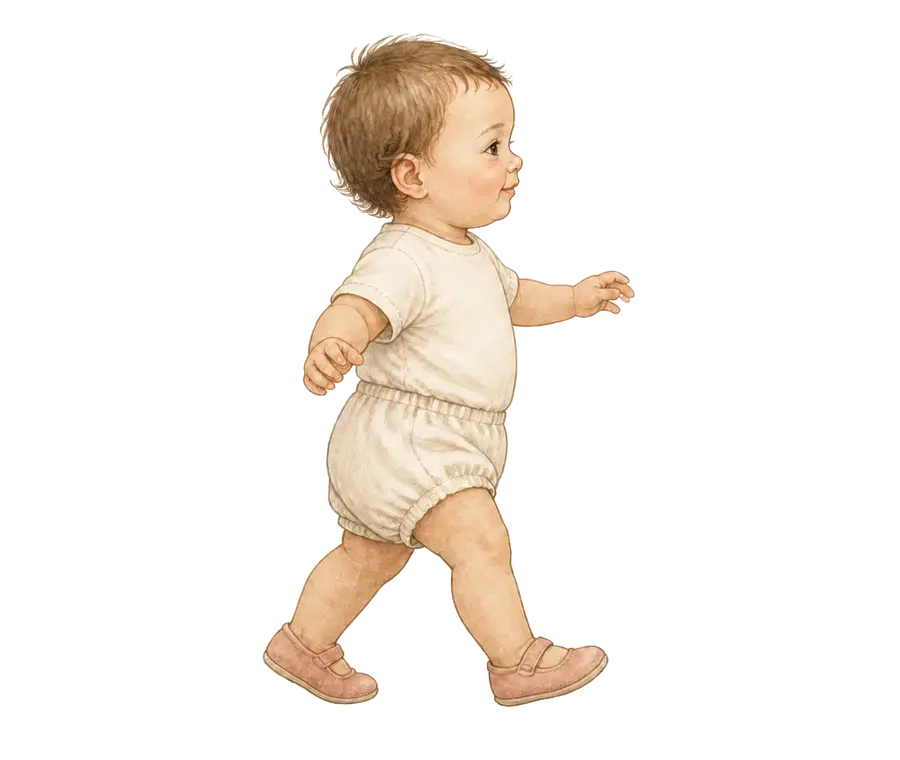
    By around 18 months, many toddlers walk independently, point to share something interesting and follow a simple instruction. They may travel farther from you and then return or look back for reassurance. Strong feelings are common, especially when they are tired, hungry or unable to explain what they want.

    • Walking is common by 18 months
    • Exploring often includes checking back

    Try this together

    Make a short everyday route safe for practice and stay nearby. Let your toddler choose when to move between steady supports.

    See all five topics
  17. M21–23

    Within Months 21–23

    Big feelings and growing independence

    What you may notice now

    Your toddler may use more words, gestures and pretend play to show what they want. They still cannot always explain a strong feeling, so frustration and tantrums may become louder. When they are upset, help them calm before giving a long explanation. Meals, naps and growth continue to change gradually rather than on a developmental timetable.

    • Two words may start to join together
    • Frustration can become louder

    Try this together

    Use a few words to name the feeling and stay nearby. Wait until your toddler is calmer before explaining the limit.

    See all five topics
  18. M24

    Within Month 24

    More words and pretend play at two

    What you may notice now

    By age 2, many toddlers join two words, use pretend play and solve simple problems such as opening a lid or finding a hidden toy. They may notice when someone is upset and look at your face when a situation is unfamiliar. These skills emerge at different times, and development continues well beyond the second birthday.

    • Two-word phrases may emerge
    • Your toddler may look to you in a new situation

    Try this together

    Follow your toddler’s interest and add one or two words to what they point at or say. They do not need to repeat you.

    See all five topics

Two years of change, from birth to toddlerhood.

Chapter details

These ages are a guide, not a prediction or test.

Loading chapter details…